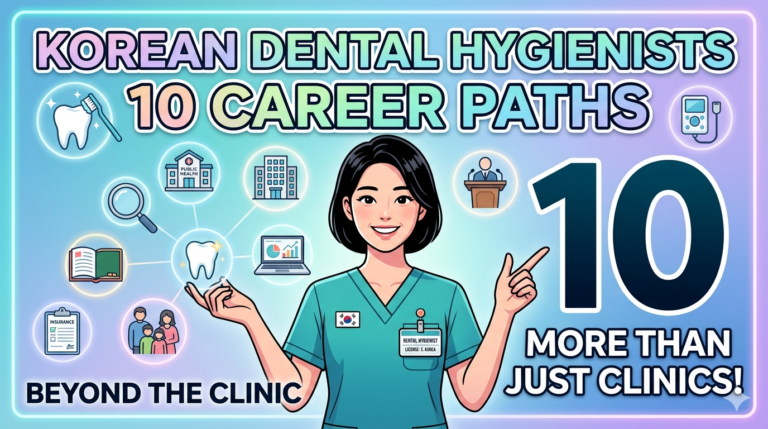
Why I Chose to Become an Orthodontic Dental Hygienist in South Korea, Korean dental hygienist
I worked as a dental hygienist in South Korea for more than 10 years.
Many people know that dentistry has different specialties, but they are often unfamiliar with how dental clinics are organized in Korea. The most common specialties include restorative dentistry, periodontics, pediatric dentistry, and orthodontics.
Throughout my entire career, I worked exclusively in orthodontics.
Looking back, it was one of the best decisions I ever made.
How to Become a Dental Hygienist in South Korea
In South Korea, dental hygienists are licensed healthcare professionals.
To become a dental hygienist, students must graduate from a dental hygiene program, complete the required education and clinical training, and pass the national licensing examination.
After obtaining a license, dental hygienists can work in private dental clinics, dental hospitals, university hospitals, and public health institutions.
What Do Dental Hygienists Do in Korea?
Many people assume that dental hygienists only perform dental cleanings, but the role is much broader than that.
Depending on the clinic, dental hygienists may be responsible for:
- Preventive dental care
- Dental scaling and oral hygiene education
- Taking dental radiographs
- Assisting dentists during treatment
- Instrument sterilization and infection control
- Patient consultation and education
- Follow-up care and appointment management
The exact responsibilities can vary depending on the size of the clinic and the specialty.
How Is It Different from Other Countries?
When I was still a dental hygiene student in 2010, I had an opportunity to visit Australia.
During that trip, I met a dental hygienist and spent time learning about the profession there. I became curious about the differences between Australia and South Korea, so I researched topics such as job responsibilities, working conditions, and salary levels.
At the time, and even today, I believe dental hygienists in Australia generally enjoy higher salaries and better working conditions than many of their counterparts in Korea.
One of the biggest differences is that dental hygienists in countries such as Australia and the United States often work more independently in preventive care roles.
In Korea, dental hygienists commonly perform preventive care while also assisting with various aspects of dental treatment and clinic operations.
Of course, every country has its own healthcare system, regulations, and work culture, so there is no perfect comparison.
Even though I found the opportunities abroad appealing, the language barrier felt overwhelming at the time. As a young student, moving to another country did not seem like a realistic option for me.
So I chose to build my career in Korea instead.
Why I Chose Orthodontics
One question I often get is why I chose orthodontics rather than another dental specialty.
The answer is actually quite personal.
During my clinical training, I spent time in several different departments. I quickly realized that orthodontics suited my personality the best.
Unlike restorative dentistry or periodontics, orthodontic treatment usually lasts for months or even years. Patients return regularly, and over time you get to know them and their families.
That long-term relationship was something I genuinely enjoyed.
I still remember seeing children come in for their first orthodontic consultation while they were in elementary school. Years later, they would complete treatment as teenagers or young adults.
Watching their confidence grow as their smiles changed was incredibly rewarding.
For me, orthodontics was never just about teeth.
It was about relationships, trust, and being part of a patient’s journey over several years.
Of course, there were difficult days too. Every healthcare profession has its challenges.
But when I look back on my career, I have no regrets about choosing orthodontics.
The experience shaped who I am today, and if I had the chance to start over again, I would probably make the same decision.