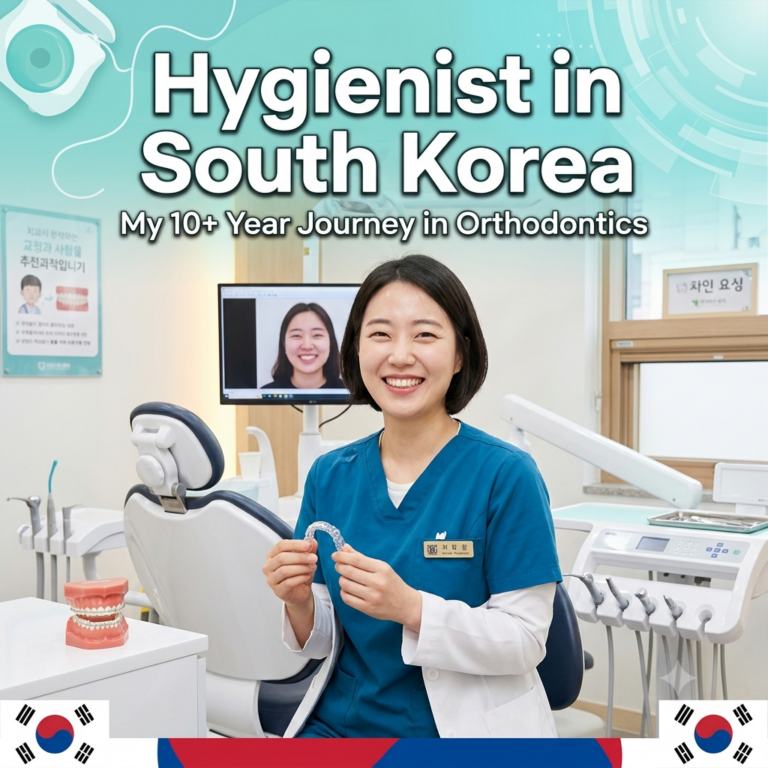
When many people think about dental hygienists in South Korea, they usually imagine someone working inside a dental clinic, assisting dentists and cleaning teeth.
That is true, but it is only part of the story.
I worked as a dental hygienist in Korea for more than 10 years, mostly in orthodontic clinics. After having my second child, I left clinical work and became a full-time mom. During that time, I started wondering about something I had never seriously thought about before.
Can Korean dental hygienists work outside dental clinics?
It turns out the answer is yes.
Many Korean dental hygienists begin their careers in hospitals or private clinics, but some later move into public health, education, healthcare companies, insurance work, or corporate health management. Some paths are easier to enter than others, and many require clinical experience first, but the career options are more flexible than people often expect.
How to Become a Dental Hygienist in Korea
In South Korea, dental hygienists are licensed healthcare professionals.
To become a dental hygienist in Korea, students must graduate from a 3-year or 4-year dental hygiene program at a college or university. During school, students study subjects such as:
- oral anatomy
- dental radiology
- preventive dentistry
- periodontology
- dental materials
- community oral health
Clinical training is also required before graduation.
After completing the required credits and clinical practice hours, students must pass the national licensing examination to officially become licensed dental hygienists in Korea.
Most graduates begin working in dental clinics or dental hospitals after obtaining their license.
What Korean Dental Hygienists Actually Do
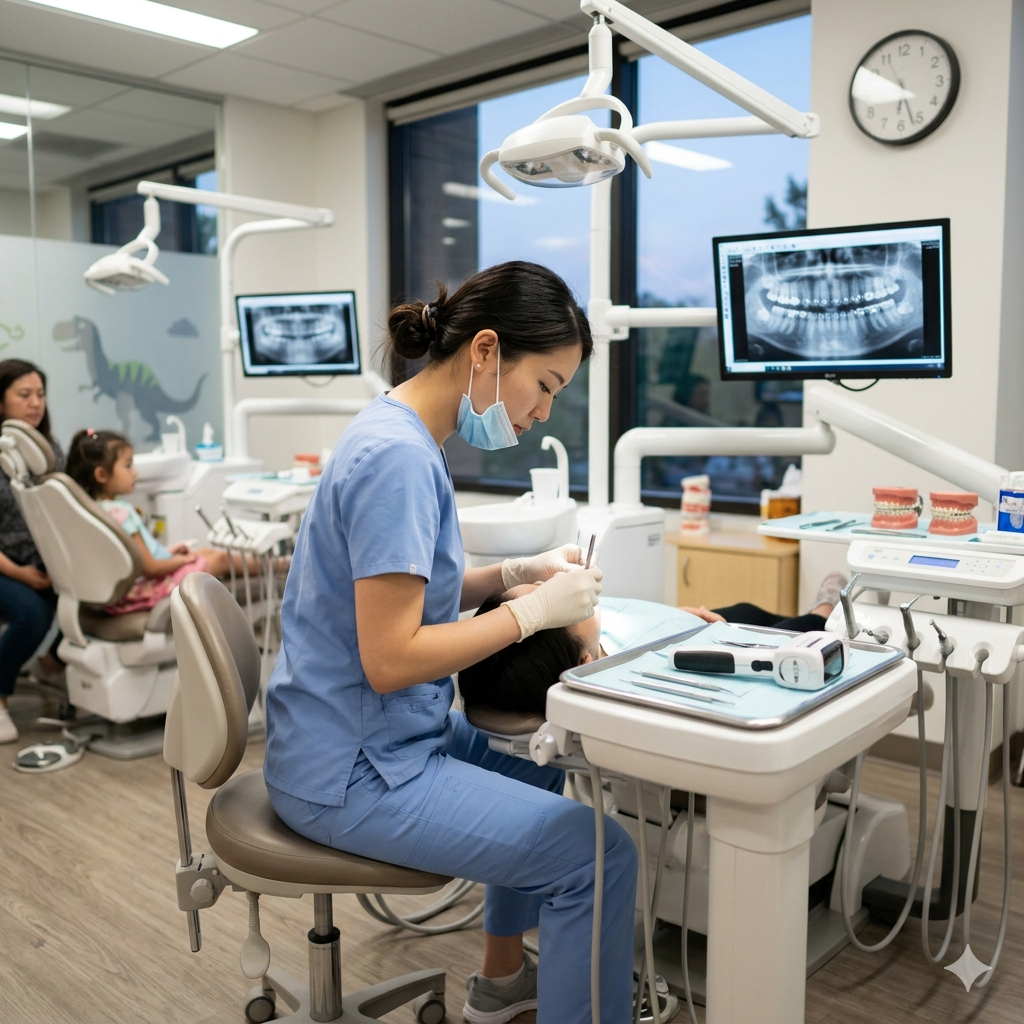
The role of dental hygienists in Korea can be slightly different from the role in other countries.
In Korea, dental hygienists often handle:
- scaling and preventive care
- chairside assistance
- patient education
- radiography
- sterilization and infection control
- consultation and patient management
In many clinics, especially orthodontic clinics, dental hygienists are heavily involved in patient communication and treatment management throughout long-term care.
Korean dental clinics also commonly operate evening hours and Saturday appointments. This is especially true in orthodontics because many patients are students or office workers who visit after school or work.
For that reason, balancing clinical work and parenting can sometimes be difficult for working mothers in Korea.
Career Paths for Dental Hygienists in Korea
1. Clinical Dental Hygienist
This is the most common career path.
Workplaces include:
- private dental clinics
- dental hospitals
- university hospitals
- orthodontic clinics
- pediatric dental clinics
Main duties:
- scaling
- preventive treatment
- chairside assisting
- patient care
- dental X-rays
Things to know:
- evening shifts are common in some specialties
- physical strain can become an issue over time
- many hygienists experience wrist, shoulder, or back pain after years of clinical work
2. Public Health Centers and Government Programs
Some dental hygienists work in public health centers or community health programs.
Main duties:
- oral health education
- fluoride programs for children
- elderly oral care programs
- community dental health campaigns
Things to know:
- some positions require passing local government employment exams
- contract-based positions also exist
- hiring systems vary by region
This path is often considered more stable compared to private clinics.
3. Health Screening Centers
Some Korean dental hygienists work at medical screening centers connected to hospitals or companies.
Main duties:
- oral examinations
- patient counseling
- preventive education
- screening assistance
Things to know:
- regular working hours are more common
- reservation-based systems are common
- clinical experience is usually preferred
4. Dental Companies and Medical Device Companies
This is a career path many people outside Korea do not know about.
Dental hygienists sometimes work for:
- implant companies
- dental material companies
- oral care brands
- medical device companies
Main duties:
- product education
- seminars
- clinical support
- customer communication
- marketing content
Companies often prefer applicants with clinical experience because they already understand real dental workflows and patient communication.
5. Treatment Coordinators and Consultation Managers
Experienced dental hygienists sometimes move into patient consultation roles.
Main duties:
- orthodontic consultations
- implant consultations
- scheduling
- insurance explanations
- customer service
Communication skills are especially important in this field.
6. Insurance Claim Specialists
Some dental hygienists specialize in insurance and billing systems.
Main duties:
- insurance claims
- documentation
- claim reviews
- administrative support
Things to know:
- attention to detail is important
- experience with insurance systems is often required
- some people later work remotely or freelance
7. Corporate Healthcare and Industrial Health Management
This is one of the lesser-known career paths.
Some companies hire healthcare staff for employee wellness programs or health management departments.
Main duties:
- health education
- wellness campaigns
- oral health promotion
- employee counseling
Most of these jobs are not specifically labeled “dental hygienist positions,” but clinical experience and healthcare knowledge can still be valuable.
8. Oral Health Education and Community Programs
Some dental hygienists participate in educational programs at:
- schools
- kindergartens
- welfare centers
- public health programs
Main duties:
- toothbrushing education
- oral health classes
- parent education
- nutrition and cavity prevention education
People who enjoy teaching and public speaking often prefer this type of work.
9. Elderly Oral Care and Visiting Healthcare
As Korea becomes an aging society, elderly oral healthcare is becoming more important.
Workplaces may include:
- nursing hospitals
- welfare centers
- public visiting healthcare programs
Main duties:
- denture care education
- oral hygiene management
- caregiver education
- visiting oral care support
10. Education and Academic Careers
Some dental hygienists continue into:
- university teaching
- clinical instruction
- academic research
In many cases, graduate school degrees such as a master’s or doctorate are required for these positions.
Why Some Korean Dental Hygienists Leave Clinical Work
Many dental hygienists in Korea stay in clinical practice for years, but others eventually look for different career paths.
Common reasons include:
- physically demanding work
- evening and weekend schedules
- burnout from patient care
- balancing parenting and work
Orthodontic clinics, in particular, often operate late hours because students and office workers usually visit after school or work.
For mothers with young children, that schedule can be difficult to maintain long term.
Final Thoughts
Before I started researching this topic myself, I also believed that a Korean dental hygienist could only work inside a dental clinic.
But after looking deeper into it, I realized the license can lead to many different directions.
Most alternative career paths still value clinical experience, but the skills developed in clinics — communication, patient education, organization, and healthcare knowledge — can also transfer into other fields.
For Korean dental hygienists who are thinking about career changes, parenting, or long-term work-life balance, there may be more options available than they first expected.