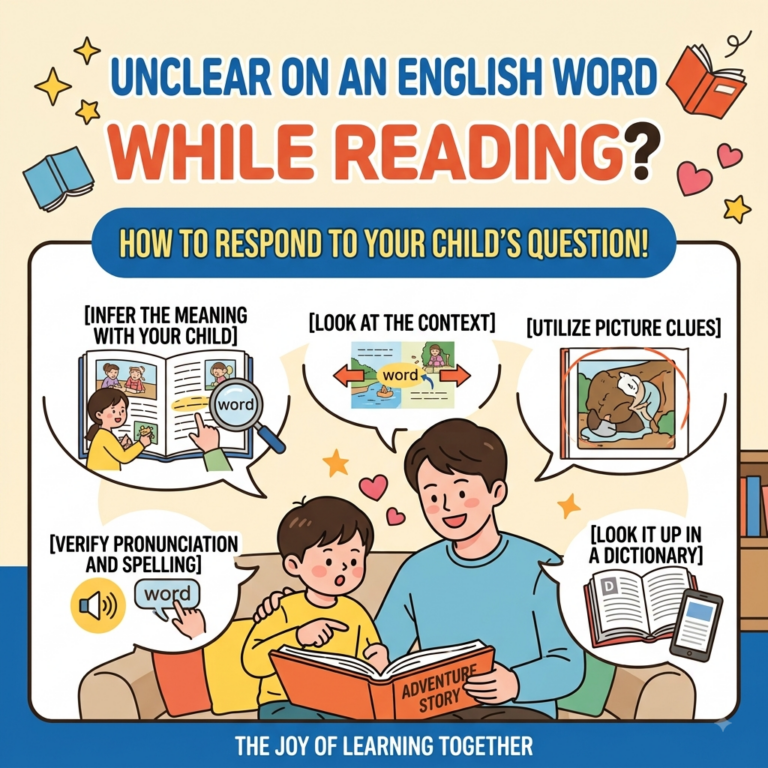
Our homeschool routine after starting English kindergarten changed more than I expected.
When my two kids started English kindergarten in March,
I had a clear plan for our homeschool routine.
I thought I knew exactly what to focus on,
how much to do, and how to balance everything.
But one month later…
I can confidently say this:
Things did not go as planned.
And honestly? That turned out to be a good thing.
In this post, I want to share
what actually changed,
what worked, what didn’t,
and how I’m adjusting our homeschool approach moving forward.
✔️ What Changed After 1 Month
1. My Older Child (5 Years Old)
✔️ Korean Reading Suddenly “Clicked”
One of the biggest surprises was reading.
Out of nowhere, my child started reading words
from everyday situations—like signs on buses
or simple words on street ads.
Not perfectly, of course.
Mostly simple words without complex endings.
But the important part is this:
He started trying to read on his own.
That shift—from passive recognition to active reading—
felt like a major milestone.
It also reminded me that
learning doesn’t always follow our schedule.
Sometimes, it just “clicks” when the child is ready.
✔️ Why We Started a Simple Daily Journal
We recently started a very simple journaling habit.
Not for writing skills.
But for something more important.
To understand his thoughts and feelings.
Every day, I ask questions like:
- “What was the most fun part of your day?”
- “What do you remember the most today?”
- “Is there anything you want to write about?”
Then I help him turn that into one sentence.
I still guide every word,
but that’s okay.
Right now, the goal is not independence.
It’s expression and connection.
✔️ Math: Why Understanding Numbers Comes First
We’ve been using a few simple tools at home to build number sense,
especially visual materials like number boards and beginner math workbooks.
I’ll link a few similar resources we’ve been using below for reference.
- number board (100 chart)
We’ve been using a number board at home, and to be honest – it wasn’t easy at first.
My older child (5 years old) actually found it quite challenging in the beginning.
Understanding number order and patterns took time,
and it didn’t click right away.
But as we kept using it,
I started to see how it helps build real number sense
instead of just memorizing numbers. - preschool math workbook
- counting toys
At first, I wanted to move into double-digit addition.
But as we continued, I realized something important:
Understanding numbers is more important than calculating them.
Recognizing “15” is not the same as understanding
what “15” actually represents.
So instead of pushing calculation,
we shifted focus to:
- number patterns
- number sense
- visual tools (like number boards)
It’s similar to learning a language.
You don’t just memorize letters first.
You understand meaning.
That’s the direction we’re taking now.
✔️ English: Clear Progress from Kindergarten
For English reading practice,
we mostly use simple beginner-level books similar to these:
English showed the most visible improvement.
- Letter recognition (upper/lowercase) became stable
- Interest increased significantly
- He started reading simple words like you, go
It’s not full comprehension yet—
more like memorization mixed with familiarity.
But still, a clear step forward.
We’re also trying to read 2 books a day
(using kindergarten homework materials).
Honestly, balancing Korean + English reading
is harder than I expected.
2. My Younger Child (3 Years Old)
With my younger child,
things look very different.
✔️ Learning Through Sibling Influence
Most of her learning comes from watching her older brother.
Sometimes it’s real interest.
Sometimes it’s just:
“I want to do what he’s doing.”
And that’s okay.
✔️ Number Confusion (6 and 9, 15 → 51)
She still confuses numbers like 6 and 9.
Also, when she sees 15,
she might read it as 51.
At first, I was concerned.
But seeing that my older child
went through a similar phase,
I now see this as a normal step.
She recognizes numbers—
just not their structure yet.
✔️ Early Writing Attempts
She recently learned how to write her brother’s name in English:
LEO
It’s a simple name,
so it’s easier to copy.
She can’t write her own name yet (it has “R,” which is harder),
but the attempt itself is meaningful.
At this stage,
I focus more on exposure than correction.
✔️ What I Realized as a Parent
This might be the biggest lesson.
I used to believe that
a well-structured plan was everything.
(I’m definitely a “planner” type.)
But with two young kids,
plans almost never go as expected.
And when they didn’t,
I felt stressed… and rushed them.
Eventually, I realized:
The problem wasn’t my kids.
It was my expectations.
✔️ Our Current Routine (Simplified)
Instead of detailed plans,
I now focus on a simple daily flow:
- After school → wash up
- Snack time
- Homework (kindergarten)
- Light study (homeschool)
- Free play (while I prepare dinner)
- Dinner
- Reading time
- Bedtime
That’s it.
No strict academic targets.
Just consistency.
✔️ What I’m Changing Moving Forward
My new rule is simple:
Consistency over intensity.
So for the next month:
Older child
- Continue reading naturally
- Focus on review rather than new content
- Maintain number sense activities
Younger child
- Strengthen basic number recognition
- Encourage speaking and participation
- Keep learning playful and pressure-free
Recommended Learning Resources (What We Actually Use)
👉 Math (number sense tools)
We focused more on understanding numbers rather than just calculating.
- 100 Chart / Number Board (great for visualizing number patterns)
- Preschool Math Workbook (focus on number sense, not just drills)
- Counting Toys (helpful for connecting numbers to real objects)
👉 Reading (Korean/English books)
Balancing two languages has been challenging, so we kept things simple.
👉 Writing (journals, pencils, tracing books)
We recently started journaling, so we’re keeping tools very simple.
- Primary Writing Notebook (large spacing for beginners)
- Tracing Books (to build confidence)
- Easy Grip Pencils for Kids
This pencil has been especially helpful for my kids.
The thicker size makes it much easier for small hands to hold,
and since the lead is softer (B), it shows clearly even with light pressure.
It’s a great option for kids who are just starting to write
or still developing hand strength.
✔️ Final Thoughts
I still don’t know if this is the “right” way.
But one thing is clear:
Perfect plans don’t matter as much as steady progress.
So instead of chasing an ideal routine,
I’m choosing to follow my kids’ pace—
and keep going.
Some of the links in this post may be affiliate links, which means I may earn a small commission at no extra cost to you. I only share products we actually use at home.