ZERO SODAS KIDS
“Zero soda should be fine, right?”
No sugar, no calories…
it feels like a safer option for kids.
But when it comes to teeth,
that assumption might not be completely true.
In our house, this comes up more often than I’d like.
My husband keeps trying to give our kids
a sip of zero cola…
and honestly, I don’t like it.
I get the appeal.
That fizzy, refreshing feeling,
especially after greasy food,
is hard to resist.
I like soda too.
But when it comes to kids,
“it’s probably fine” doesn’t feel like a good enough reason.
So I decided to look into it more carefully.
Are zero sodas actually safe for kids?
Short answer:
They’re better than regular soda in some ways,
but they’re not completely harmless.
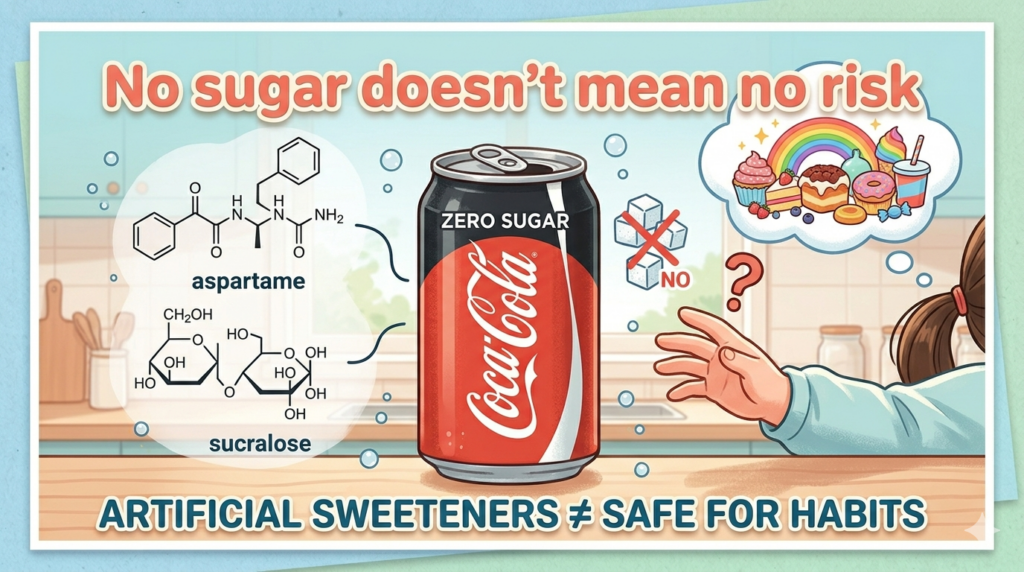
No sugar doesn’t mean no risk
Zero sodas use artificial sweeteners
like aspartame and sucralose
instead of sugar.
These don’t spike blood sugar
and are considered safe in moderate amounts.
But for young kids,
there’s still something to think about.
Early exposure to very sweet flavors
may increase their preference for sweetness later on.
And that’s not a habit I want to build too early.
The real issue: acidity (pH)
This is the part that changed my perspective.
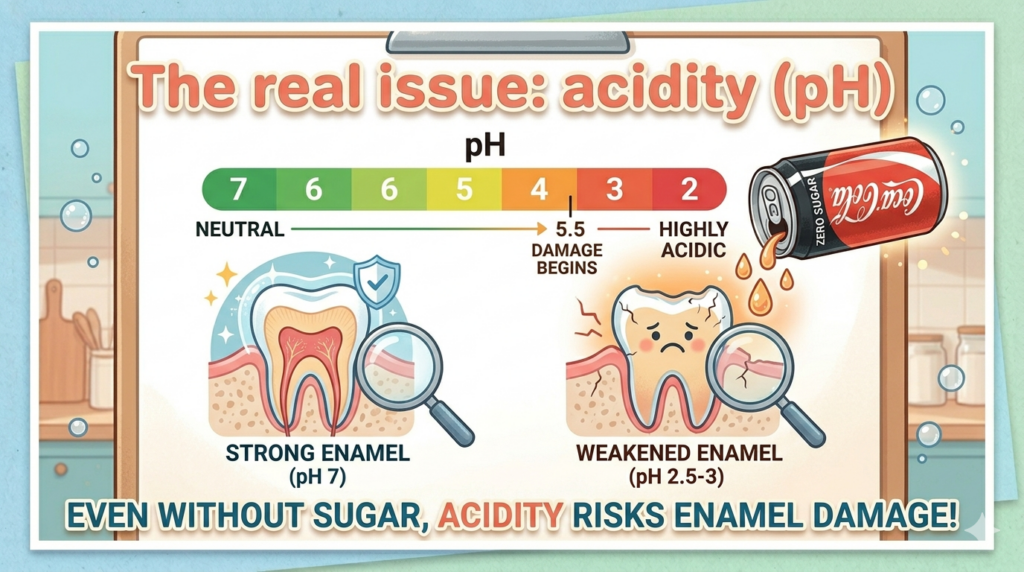
Tooth enamel starts to weaken
at around pH 5.5.
Most sodas, including zero cola,
have a pH between 2.5 and 3.
That’s highly acidic.
Even without sugar,
this level of acidity can slowly wear down enamel
and increase the risk of dental problems.
So no,
zero soda is not “tooth-safe.”
What about kids in Western countries?
It’s true that soda is more accessible
in places like the US and Europe.
But that doesn’t mean it’s considered healthy.
Organizations like the
American Academy of Pediatrics
and the
World Health Organization
recommend limiting sugary drinks for children,
and that includes soda in general.
So while exposure may be more common,
the health recommendations are actually quite strict.
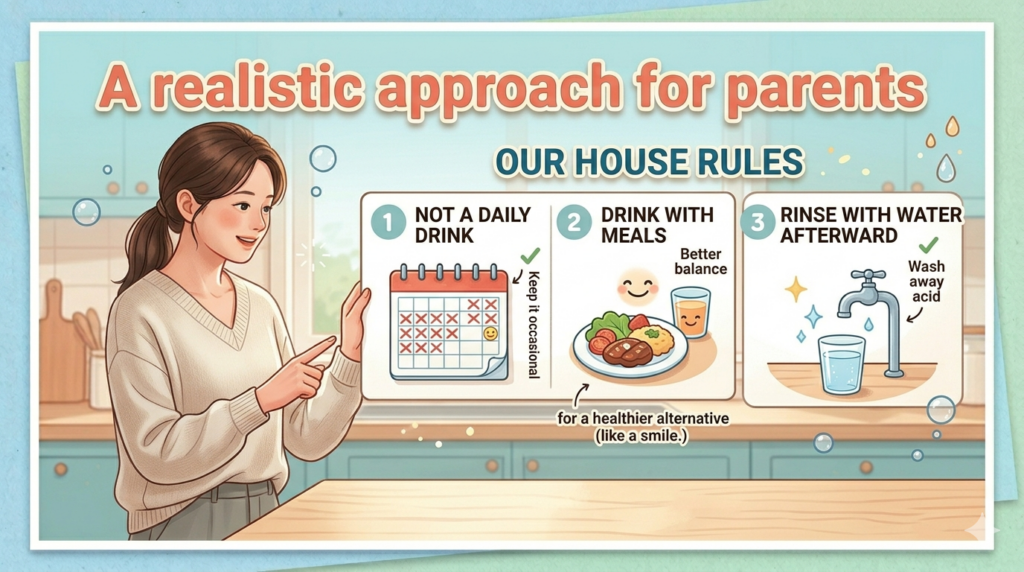
A realistic approach for parents
Let’s be honest.
Completely banning something forever
isn’t always realistic.
So instead of extremes,
I focus on simple boundaries:
- Not a daily drink
- Only occasionally, in small amounts
- Better with meals than alone
- Rinse with water afterward
- Avoid before bedtime
- Use a straw if possible
Small habits can make a big difference.
Simple alternatives that worked for us
Instead of soda, I started looking for
options that feel like a “treat”
but are easier on kids’ teeth.
- Naturally flavored water (no added sugar)
- Diluted fruit-infused water
- Low-sugar coconut water
These swaps are simple,
but they make everyday choices easier.
Some parents also use straw bottles
to reduce how much the drink touches the teeth.
Some parents also use straw bottles
to reduce how much the drink touches the teeth.
It’s a small change, but it can help.
→ [See popular kids straw bottles]
It’s a small change,
but it can help protect enamel over time.
And for daily habits,
having a kid-friendly toothbrush routine
also makes a difference when it comes to protecting teeth.
Just to make things easier,
I started looking for alternatives we could feel better about.
Here are a few simple options we found helpful:
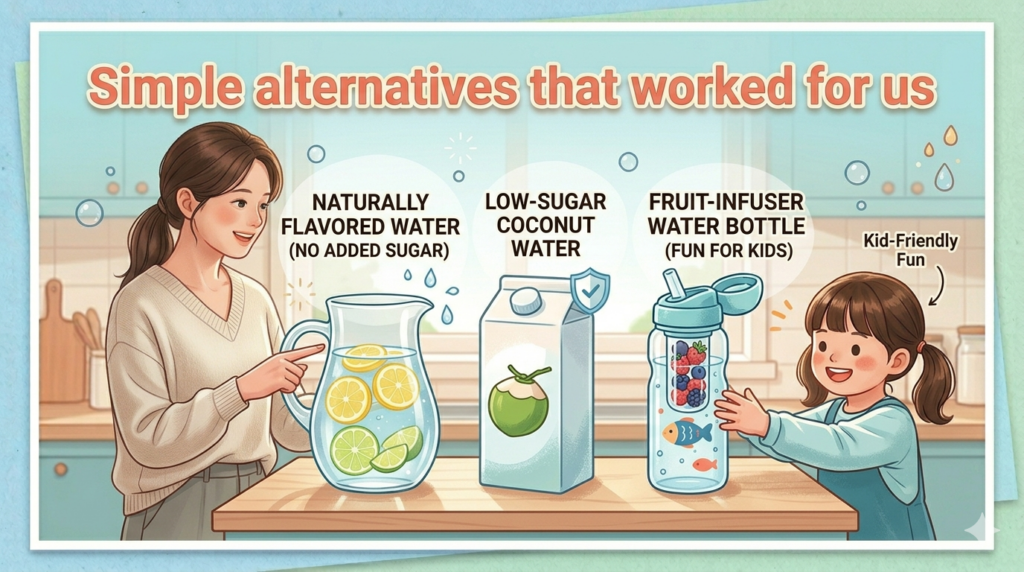
- Naturally flavored water (no added sugar)
→ [Check options on Amazon] - Low-sugar coconut water
→ [See kid-friendly brands] - Fruit-infuser water bottles (fun for kids)
→ [View on Amazon]
So… would I give zero soda to my kids?
For now,
I’d rather not.
Not because it’s dangerous,
but because it’s not necessary.
And when something isn’t necessary
and still has downsides,
I’d rather wait.
If your child already enjoys fizzy drinks,
it might be better to slowly switch
to gentler alternatives
instead of cutting it off completely.
So yes…
I’ll probably keep saying this at home:
“Not yet.”
You might also like
- What drinks are actually safe for kids? (water vs juice vs milk)
- How to prevent cavities in young children
- Easy healthy snack ideas for toddlers
If your child already enjoys fizzy drinks,
it might be better to slowly switch
to gentler alternatives.
→ [Explore healthier drink options for kids]
This post may contain affiliate links.
As an Amazon Associate, I earn from qualifying purchases at no extra cost to you.