Gwanghwamun underground museum!
If you are looking for a fantastic free indoor activity for kids in central Seoul, the underground museums at Gwanghwamun Square are a must-visit.
This hidden gem is located directly beneath the massive statues of King Sejong the Great and Admiral Yi Sun-sin. It’s a place that many tourists—and even locals—often overlook while walking across the square. It is easy to access by elevator or stairs, making it a perfect escape on cold, hot, or rainy days.
Pro-Tip: Find the “Secret” Entrance! Look for the small, unassuming door located directly behind the King Sejong statue. It feels like entering a secret underground base, which adds an extra layer of excitement for the kids!
We visited because the kids recently became interested in Korean history, especially Admiral Yi Sun-sin. They were very excited even before we arrived, and the visit turned out to be a fun and educational experience.
The best part is that admission is completely free, so it is easy to stop by without feeling rushed.
Visitor Information
Location: Underground of Gwanghwamun Square, Seoul
Hours: Tuesday – Sunday, 10:00 – 18:30
Closed: Mondays
Admission: Free
There is no dedicated parking lot, so public transportation is recommended.
If you are driving, you can use nearby parking facilities and walk to the entrance.
There are several entrances around the square, including near the statues and nearby buildings.
This museum is a good option if you are traveling with kids and need a short indoor activity in central Seoul.
Sejong Story Hall
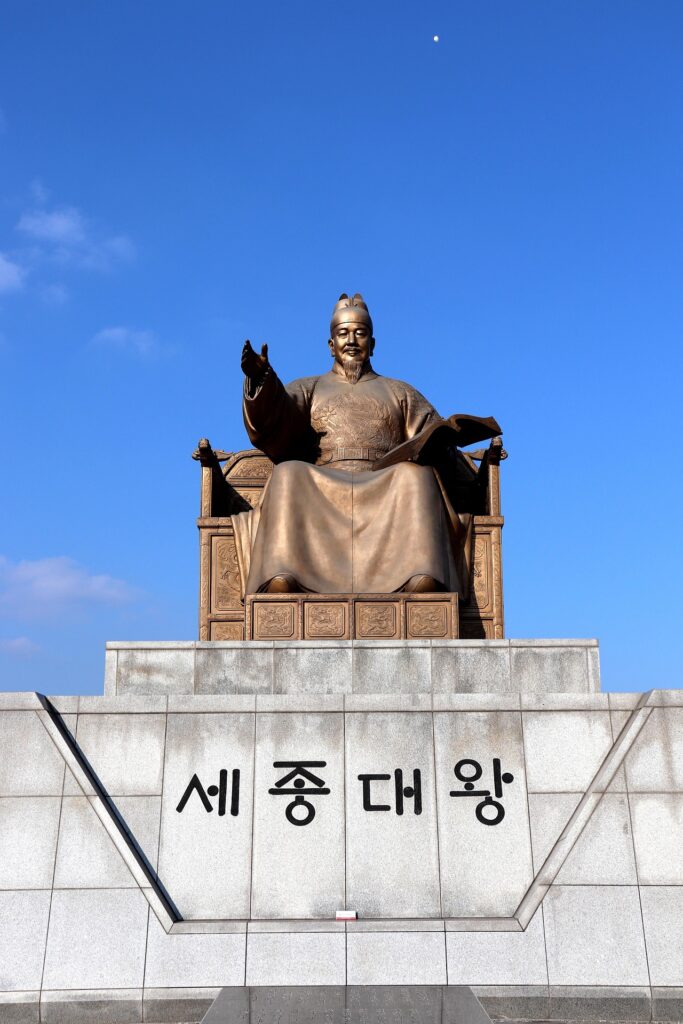
The first exhibition area focuses on Sejong the Great, one of the most respected kings in Korean history.
King Sejong is best known for creating Hangul, the Korean alphabet.
Before Hangul was invented, only educated people could read and write using Chinese characters. King Sejong wanted ordinary people to be able to read and express themselves easily, so he created a writing system that was simple and logical.
Hangul is considered one of the most scientific writing systems in the world. Consonants and vowels combine in a structured way to represent sounds clearly and logically. Because of this system, Hangul is known as a writing system capable of representing virtually all human sounds.
Another remarkable fact about Hangul is that it is the only writing system in the world whose purpose and creation principles were fully documented at the time of its invention. These details were recorded in the Hunminjeongeum, which explains how and why the alphabet was created.
This reflects King Sejong’s deep care for ordinary people. He believed that if people could read and write, they could improve their lives. His desire to help common people learn is often described as his love for the people, or humanitarian spirit.
When Hangul was first created, many scholars opposed it because they believed only classical Chinese should be used. However, King Sejong insisted that common people deserved a writing system they could actually learn and use.
Inside the exhibition hall, there are interactive displays and media exhibits that explain his life and achievements.
One of the most interesting features was the AI Sejong experience. A digital version of King Sejong appears on a screen and introduces himself. Visitors can select questions from a list, and the AI responds with answers about his life and ideas.
This interactive feature makes history easier and more engaging for children.
There is also a photo area where visitors can try on royal costumes and sit on a king’s chair, which is especially fun for younger kids.
Admiral Yi Sun-sin Story Hall
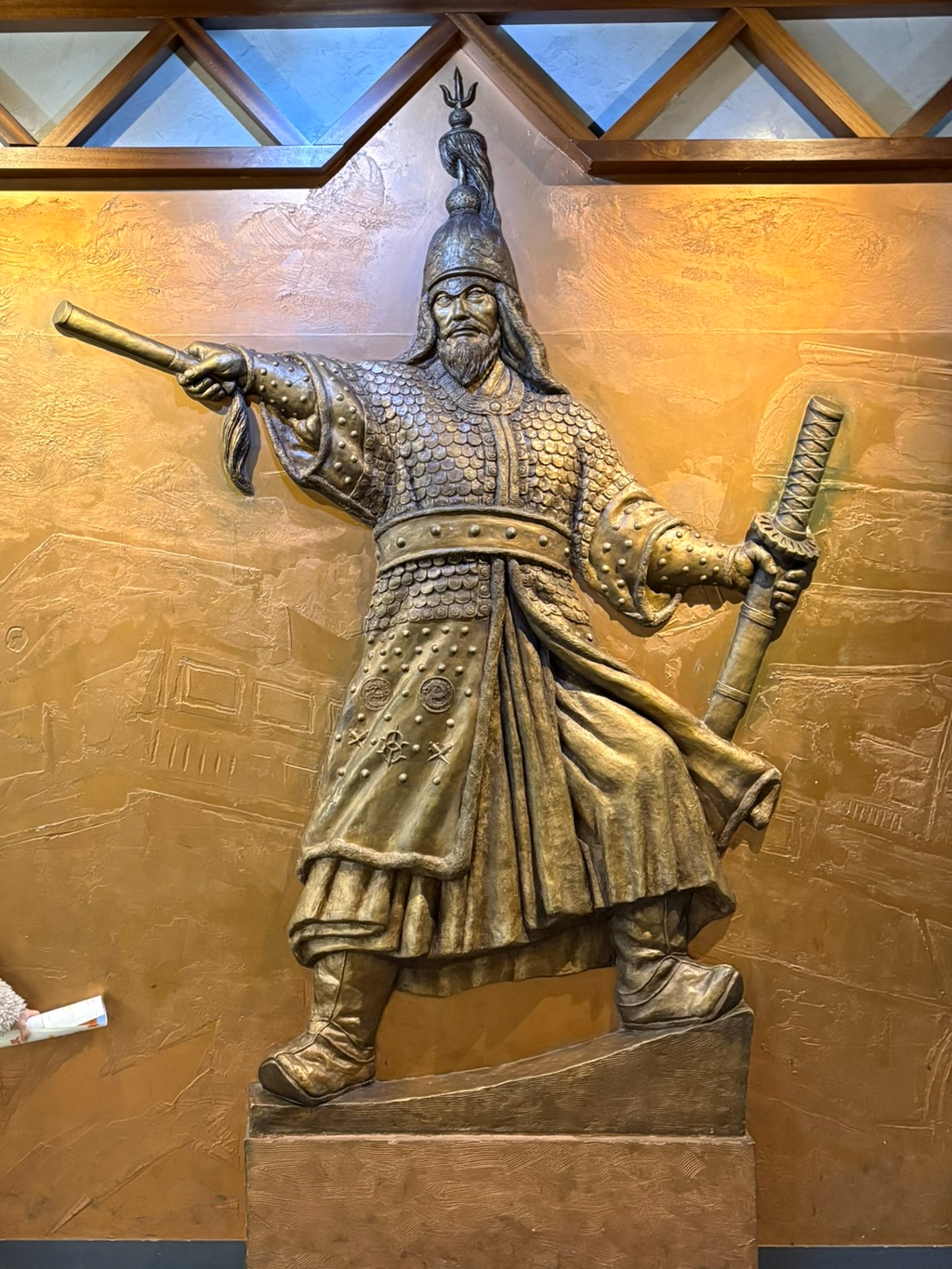
The next section focuses on Yi Sun-sin, one of Korea’s most famous historical heroes.
Admiral Yi Sun-sin was a naval commander during the Japanese invasions of Korea in the late 16th century. Despite difficult conditions and limited resources, he achieved many important victories and successfully defended the country.
He is often remembered not only for his military skill but also for his strong sense of duty and leadership.
One of his most famous inventions was the Turtle Ship, an armored warship designed to protect sailors and attack enemy ships effectively.
This section of the museum was especially popular with the kids because there were many hands-on activities.
There were several interactive experiences, including:
- Rowing simulation
- Cannon shooting game
- Battle formation puzzle
- Turtle ship model display
The battle formation activity helped explain the famous “Crane Wing Formation,” one of Admiral Yi’s most well-known naval strategies. Visitors can move pieces around to understand how the formation worked during battles.
There was also a photo area where kids could dress up as a general and take pictures in front of a turtle ship model.
We spent almost an hour in this section alone because the activities kept the kids interested.
Famous Words of Admiral Yi Sun-sin
Admiral Yi Sun-sin is also remembered for his famous quotes.
One of his most well-known sayings is:
“Those who seek to live shall die, and those who seek to die shall live.”(Fight to the death and you shall live; wish to live and you shall die.)
This phrase reflects his courage and determination during difficult battles.
Another famous story comes from his final battle. After being fatally wounded, he reportedly said:
“Do not let my death be known.”
He wanted his soldiers to continue fighting without losing morale.
These stories help explain why Admiral Yi is still respected and remembered today.
The War Diary of Admiral Yi
Admiral Yi also kept a detailed personal diary during the war.
This diary, known as the Nanjung Ilgi, is one of the most famous historical records in Korea.
In the diary, he wrote about battles, daily life, and his thoughts and worries as a commander. The diary shows that he was not only a great military leader but also a thoughtful and responsible person.
Today, the diary is considered an important historical document and helps people better understand his life and experiences.
Why This Museum is Good for Kids
This museum is especially suitable for children because:
- Free admission
- Indoor space
- Interactive exhibits
- Hands-on activities
- Short visit time
- Educational content
Even children who are not very interested in history can enjoy the games and interactive displays.
It is also a good introduction to Korean history for international visitors and families living in Seoul.
Overall Experience
We did not expect to stay long, but we ended up spending quite a bit of time there.
The museum is not very large, but it has enough activities to keep kids interested. The interactive exhibits make it easier for children to understand historical figures in a fun way.
Since admission is free, it is easy to visit without pressure.
If you are visiting central Seoul with kids, this museum is definitely worth a visit.