Korean Birthday Traditions: Why Certain Ages Are Special in Korea
In Korea, birthdays are more than just cake and presents.
Certain ages are considered especially meaningful, and families often celebrate them with large gatherings, traditional foods, and special events.
If you spend time in Korea or have Korean friends, you may hear words like “Doljanchi,” “Hwangap,” or “Chilsun.” These celebrations are connected to Korean history, family culture, and the idea of honoring important life milestones.
Some traditions are still very common today, while others have changed with modern lifestyles.
Doljanchi: Korea’s First Birthday Celebration
Doljanchi
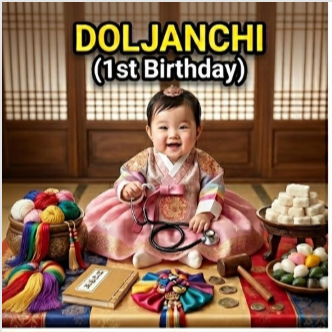
A baby’s first birthday is one of the most important celebrations in Korean culture.
In the past, infant mortality rates were much higher than they are today, so reaching the first birthday was considered a major milestone. Families celebrated with gratitude and hoped for the child’s healthy future.
This tradition became known as “Doljanchi.”
One of the most famous parts of a Doljanchi is “Doljabi,” where different objects are placed in front of the baby. The item the baby picks is believed to symbolize their future.
Common items include:
- Money for wealth
- A pencil or book for academic success
- Thread for long life
- A microphone for entertainment or speaking talent
These days, many families also include modern items like golf balls, stethoscopes, laptops, or cameras.
Traditional Doljanchi parties were usually held at home, but nowadays many Korean families celebrate at hotels, party halls, or restaurants with professional photography and decorated birthday tables.
👉 If you want to learn more about Korean first birthday traditions, you can also read my detailed post about Doljanchi here.
Hwangap: The Traditional 60th Birthday
Hwangap
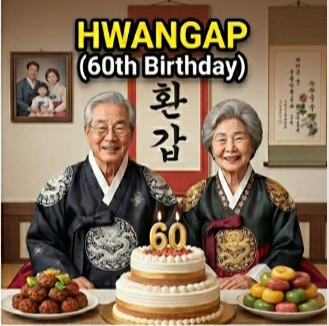
Turning 60 has traditionally been considered one of the biggest milestones in Korea.
“Hwangap” marks the completion of the traditional 60-year zodiac cycle used in East Asian culture. In earlier generations, living to 60 was not very common, so families celebrated it as an important achievement and a symbol of longevity.
Traditionally, children prepare a celebration for their parents, often including:
- Large family gatherings
- Special meals
- Traditional Korean clothing (hanbok)
- Family photos
In the past, banquet-style celebrations were common, but modern Korean families often celebrate more simply today. Some prefer traveling together or having a quiet family dinner instead of hosting a large event.
Chilsun and Gohuyeon: Celebrating Age 70
Chilsun
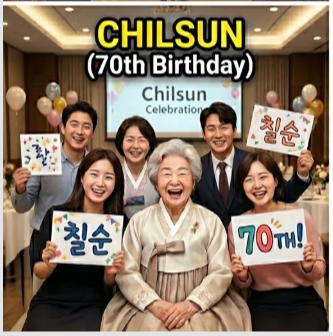
The 70th birthday is also considered very meaningful in Korea.
“Chilsun” simply means “70th birthday,” while “Gohuyeon” is a more traditional term for the celebration banquet.
The word “Gohi” comes from an old Chinese phrase meaning:
“Living to seventy was rare even in ancient times.”
Because reaching 70 years old was once considered uncommon, families celebrated it as an especially joyful occasion.
Today, life expectancy is much higher, so turning 70 is more common than before. Still, many Korean families continue gathering together to celebrate parents and grandparents with meals, family photos, and small parties.
Palsun: The 80th Birthday Celebration
Palsun
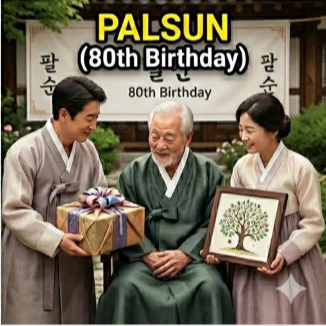
The 80th birthday, called “Palsun,” is another important family milestone in Korea.
At this age, celebrations are often focused less on formal traditions and more on spending meaningful time together as a family. Children and grandchildren gather to show respect and appreciation for the elder family member.
How Korean Birthday Culture Is Changing
Korean birthday traditions still exist today, but celebrations have changed over time.
Younger generations often prefer smaller gatherings rather than formal traditional parties. Many families now choose simple dinners, travel, or photo shoots instead of large banquet events.
However, these milestone birthdays remain culturally important because they reflect values that are still deeply connected to Korean society:
- Family connection
- Respect for elders
- Longevity
- Shared traditions across generations
Even as modern lifestyles change, these celebrations continue to hold special meaning for many Korean families.