Why do Koreans eat seaweed soup on their birthdays? This question often surprises people outside Korea.
The Meaning Behind Miyeok-guk and a Simple Oatmeal Recipe
The last day of the Lunar New Year holiday was especially meaningful for our family — it was my son’s birthday.
In many Western countries, birthdays usually begin with cake and candles. In Korea, however, the day often starts with something much simpler: a warm bowl of seaweed soup.
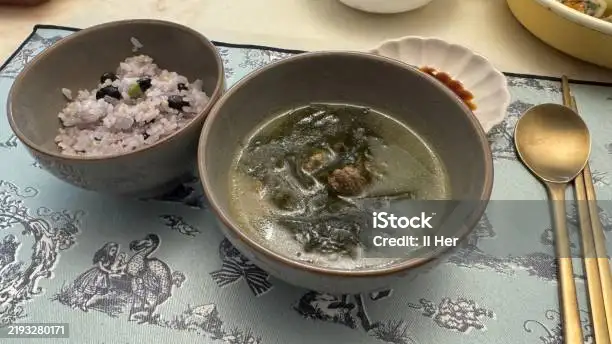
This traditional dish is called miyeok-guk (미역국), or Korean seaweed soup. But why do Koreans eat seaweed soup on their birthdays?
What Is Miyeok-guk (Korean Seaweed Soup)?
Miyeok-guk is a light soup made with dried seaweed, typically cooked in a clear broth with beef or seafood. It has a clean, mild flavor and is known for being nourishing and comforting.
Seaweed is rich in iodine, calcium, iron, and fiber. Because of its high nutritional value, seaweed has been an important ingredient in Korean cuisine for centuries.
However, the tradition of eating seaweed soup on birthdays is not only about health.
The Origin: Childbirth and Mothers
In Korea, women traditionally eat seaweed soup for several weeks after giving birth. It is believed to help replenish nutrients and support postpartum recovery.
Because of this practice, eating miyeok-guk on one’s birthday became a symbolic way of remembering one’s mother.
A Korean birthday is not only about celebrating another year of life. It is also about acknowledging the day you were born — and the person who gave you life.
Many Korean children grow up hearing this gentle reminder:
“Your birthday is the day your mom worked the hardest.”
This cultural meaning makes Korean birthday traditions slightly different from Western birthday celebrations.
Historical and Folklore Beliefs
There is also an interesting historical belief related to this tradition. Some records suggest that during the Goryeo Dynasty, people observed whales eating seaweed after giving birth. Inspired by this, seaweed became associated with postpartum recovery and nourishment.
In traditional Korean folk belief, families would also prepare seaweed soup as an offering to Samshin Halmoni (삼신할머니), a goddess believed to protect mothers and newborn babies. The soup symbolized prayers for safe childbirth, spiritual protection, and blessings for the child’s future.
Over time, these layers of history, observation, and belief shaped the modern Korean birthday tradition of eating seaweed soup.
Is Seaweed Common Outside of Korea?
Seaweed is widely used in many Asian countries such as Japan and China. However, it is not a common everyday ingredient in most Western kitchens.
In the United States and Europe, dried seaweed (often labeled as wakame) is usually found in Asian grocery stores or sold as a health food product.
If you are curious about Korean birthday traditions, dried seaweed is relatively easy to find online or in international markets.
A Simple Seaweed Oatmeal Porridge with Tuna (Miyeok Juk Variation)
If traditional Korean seaweed soup feels unfamiliar, you can try a simpler version inspired by miyeok-juk (seaweed porridge).
This variation combines seaweed with oatmeal and canned tuna — ingredients that are easy to find in many countries.
Ingredients
- 1 tablespoon dried seaweed (soaked and chopped)
- 1 teaspoon olive oil
- 2–3 tablespoons canned tuna (drained)
- 1 to 1½ cups water
- 1/4 cup rolled oats
- Salt or soy sauce to taste
Instructions
- Soak the dried seaweed in water for about 10 minutes. Rinse and gently squeeze out excess water. Lightly season with a small pinch of salt.
- Heat olive oil in a small pot over medium heat. Add the seaweed and sauté for 1–2 minutes.
- Add the drained canned tuna and stir briefly.
- Pour in water and bring to a gentle boil.
- Stir in the oats and simmer until the porridge reaches your desired thickness.
- Season with salt or a small splash of soy sauce.
- Serve warm and enjoy.
This savory seaweed oatmeal porridge is mild, nourishing, and comforting — a simple way to experience part of Korean food culture.
Korean Birthday Traditions: More Than Just Food
While birthday cake represents celebration and sweetness in many cultures, Korean seaweed soup represents gratitude and remembrance.
For many Korean families, a birthday begins not with sugar — but with reflection.
That quiet bowl of seaweed soup carries history, motherhood, and meaning.
And that is why Koreans eat seaweed soup on their birthdays.